
Why Your Business Communication Needs an Upgrade
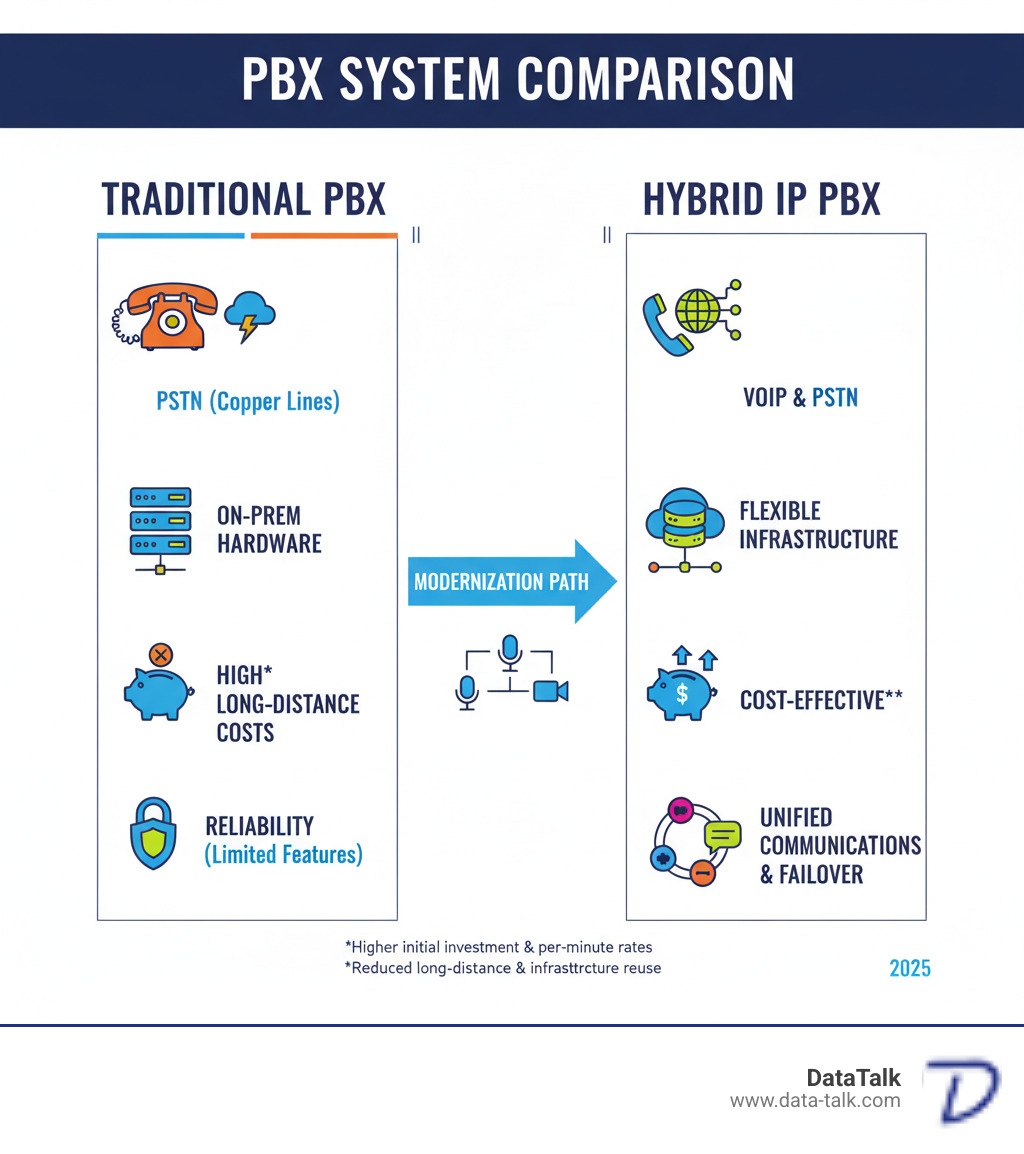
A hybrid IP PBX phone system combines traditional PBX hardware with modern VoIP (Voice over Internet Protocol) technology. This approach allows you to keep your existing phone infrastructure while adopting internet-based calling, giving you the reliability of analog lines with the flexibility and cost savings of digital communication.
Quick Definition:
- Traditional PBX hardware handles on-site phone switching and connects to standard phone lines.
- VoIP technology routes calls over your internet connection for lower costs and advanced features.
- Intelligent routing automatically chooses the best path for each call—VoIP first, then traditional lines as backup.
- Unified platform manages everything through a single system.
For many Ohio businesses, choosing a phone system is a frustrating compromise. Pure cloud systems fail when the internet drops, while traditional PBX systems lack modern features and have high long-distance costs. A hybrid IP PBX solves this by providing a safety net. You get local survivability when the internet goes down, plus modern features like video conferencing, mobile integration, and remote worker support.
You can keep your existing phone lines and equipment while moving to VoIP at your own pace. With the right partner and a proper network assessment, like DataTalk’s VOIP Scout Test, you can implement a system that works reliably today while preparing your business for tomorrow.
What is a Hybrid IP PBX and How Does It Work?
A hybrid IP PBX is a business phone system designed for companies that want modern features without abandoning their reliable traditional phone lines. It seamlessly integrates old and new technology, allowing you to keep existing equipment like desk phones and wiring while adding capabilities like internet calling and video meetings.
A hybrid system consists of several core components working together:
- PBX Hardware: The on-site “brain” of the system, typically in a server room, that routes calls.
- VoIP Gateways: Translators that convert voice signals between the analog phone network and the digital internet.
- SIP Trunks: Virtual phone lines that run over your internet connection, significantly reducing costs compared to traditional lines.
- IP Phones: Modern desk phones that connect directly to your computer network and offer advanced features.
All these pieces function as a single, unified system. From an employee’s perspective, a call is just a call—the technology behind it works automatically.

The Technology Behind the System
A hybrid system uses two key technologies side-by-side:
VoIP (Voice over Internet Protocol) converts your voice into digital packets and sends them over the internet. This enables low-cost long-distance calls, video conferencing, and the flexibility for employees to make calls from a desk phone, computer, or mobile app. However, it relies entirely on a stable internet connection.
PSTN (Public Switched Telephone Network) is the traditional phone network using copper wires. It’s incredibly reliable and works even during internet or power outages, making it an essential backup.
A hybrid IP PBX intelligently routes calls based on your internet quality. When the connection is strong, it uses VoIP to save money. If the internet becomes unstable or goes down, it automatically switches to PSTN lines. This failover provides local survivability, ensuring your business phones in Ohio stay operational no matter the weather or network conditions.
Unifying Communication Channels
A hybrid IP PBX excels at bringing all your communication channels into a single platform, eliminating the inefficiency of juggling multiple disconnected systems. It unifies essential tools like:
- Voice Calls: Handled through desk phones, whether routed via VoIP or PSTN.
- Video Conferencing: Often built-in, removing the need for separate subscriptions.
- Instant Messaging: For quick internal communication.
- Voicemail-to-Email: Delivers voicemails as audio files to your inbox for easy access.
When integrated with business software like a CRM, the system becomes even more powerful. Customer information can pop up on-screen during a call, and all communications can be managed from one interface. This unified approach makes your team more responsive and ensures consistent connectivity for employees, whether they’re in the Columbus main office, working from home in Cleveland, or at a satellite location in Cincinnati.
For a deeper dive into how these integrated systems work together, check out this guide to hybrid communication solutions.
The Strategic Advantages of a Hybrid System
A hybrid IP PBX is a strategic decision that provides a measured path to modern communications while protecting your existing investments. Key advantages include:
- Cost-Effectiveness: By leveraging your existing infrastructure—wiring, phone lines, and equipment—you avoid the cost of a complete overhaul. Routing long-distance calls over the internet via VoIP also generates significant monthly savings.
- Scalability: A hybrid system grows with your business. Adding new extensions or integrating a new office in Clintonville is straightforward, allowing you to scale from a few users to hundreds on the same platform.
- Flexibility: You can transition to VoIP at your own pace. A hybrid system lets you adopt modern features like video conferencing and mobile integration without abandoning the reliability of traditional phone lines.
- Business Continuity: This is where hybrid systems excel. With built-in redundancy and local survivability, your phones keep working even if the internet goes down. Calls automatically failover to traditional lines, ensuring you never miss a customer call.

Improved Reliability and Uptime
Phone system downtime costs money and damages customer trust. A hybrid IP PBX delivers superior reliability through automatic failover protection. The system constantly monitors your internet and reroutes calls to traditional PSTN lines the moment a problem is detected, with no manual intervention required. This redundancy, which can include backup 4G LTE connections or dedicated copper lines, provides significantly higher uptime—often well above 99.9% when properly configured—by ensuring calls can continue even during internet disruptions.
Furthermore, voice-optimized call routing intelligently selects the best path for every call, ensuring clarity and efficiency. The local survivability feature also means your internal team can still call each other even during a complete internet outage. For more details, you can read about hybrid platform reliability.
Cost Implications: Investment and ROI
While the upfront investment for a hybrid IP PBX (including hardware and professional installation) can be higher than a cloud-only solution, it often delivers a better long-term return on investment (ROI). By owning the equipment rather than renting a service, you achieve lower ongoing costs.
The real financial win comes from long-term savings. You continue to get value from existing infrastructure, long-distance charges are drastically reduced, and a phased migration budget allows you to upgrade gradually. This approach optimizes spending and builds a sustainable system that makes financial sense. Before any investment, DataTalk’s VOIP Scout Test can verify your network is ready to handle high-quality voice traffic, ensuring your investment performs as expected.
Is a Hybrid PBX Right for Your Business?
A hybrid IP PBX is an ideal solution for many Ohio businesses, but it’s important to assess your specific needs. Consider these factors:
- Current Pain Points: Are you experiencing dropped calls due to unstable internet or facing high long-distance charges?
- Legacy Equipment: Do you have a significant investment in existing analog phones or building wiring that you want to keep using?
- Workforce Distribution: Do you have a mix of in-office staff, remote employees, or multiple locations across Ohio?
- Growth Plans: Are you planning to add staff or open new offices and need a system that can scale easily?
A hybrid system is particularly valuable for industries like healthcare, manufacturing, hospitality, education, and multi-location businesses that require high reliability, need to integrate existing infrastructure, and want to centralize communications.
Key Features to Look for in a Hybrid IP PBX System
When evaluating a hybrid IP PBX, focus on features that solve real business problems:
- Call Management: Look for an auto-attendant for professional greetings, call queues to manage high volume, and an IVR system to let callers self-serve.
- Unified Messaging: Voicemail-to-email is a must-have feature, delivering messages as audio files to your inbox for access anywhere.
- CRM Integration: The ability to integrate with your CRM and other platforms like Microsoft Teams is crucial. This allows for features like on-screen caller information and click-to-call functionality.
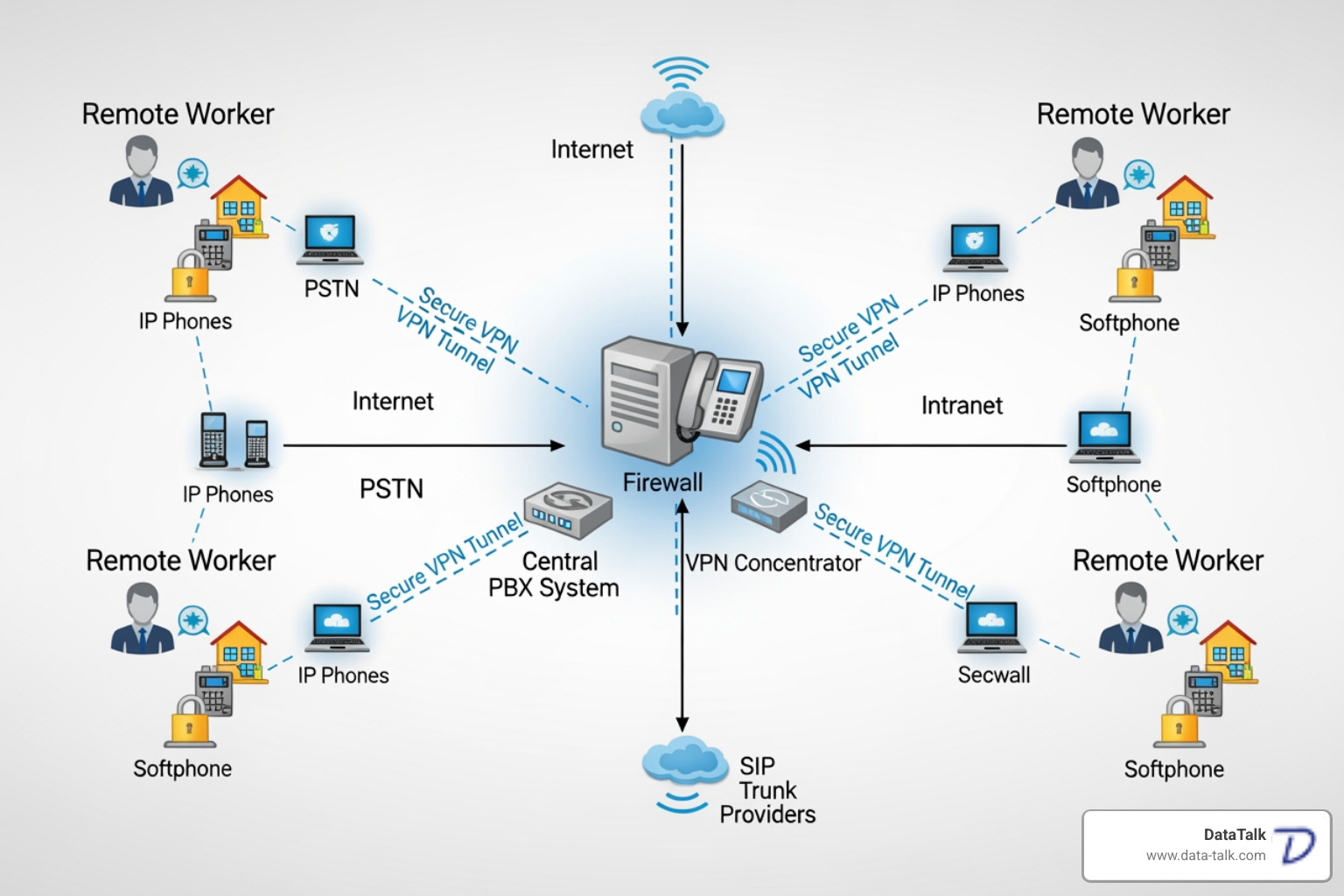
- Remote Worker Support: The system should provide secure, seamless access for remote employees without complex VPNs, allowing IP phones to work from home as if they were in the office.
- Conference Bridging: Built-in virtual conference rooms and video conferencing capabilities are essential for team collaboration across different locations.
Potential Drawbacks and Challenges
While powerful, a hybrid IP PBX has considerations to keep in mind:
- Implementation Complexity: Integrating traditional and VoIP technologies requires professional expertise. A DIY approach can lead to integration and compatibility issues.
- Higher Initial Cost: The upfront investment in hardware and professional installation is typically higher than for a pure cloud solution. However, this is often offset by long-term savings and increased reliability.
- Maintenance Requirements: A hybrid system requires some on-premise oversight, including software updates and hardware monitoring, though less than a fully traditional PBX.
Working with an expert partner like DataTalk mitigates these challenges. Our VOIP Scout Test ensures your network is ready for high-quality voice before installation, preventing common performance pitfalls and guaranteeing your hybrid system delivers on its promise.
Implementation and Security Best Practices
A successful hybrid IP PBX deployment depends on a methodical implementation process and robust security.
The process begins with a thorough infrastructure assessment, where a provider examines your cabling, network components, and internet connectivity. At DataTalk, our unique VOIP Scout Test guarantees your network can support optimal voice quality before any equipment is installed. This is followed by professional installation and configuration, where experts connect the hardware and software, set up call routing, and test failover scenarios.
A key benefit of a hybrid system is its support for a distributed workforce. It simplifies secure access for remote workers and provides centralized management for multi-location businesses. Whether your offices are in Columbus, Cincinnati, or Cleveland, you can manage all users, settings, and phones from a single web-based interface, reducing administrative complexity and cost.
Security Considerations for Your Hybrid IP PBX
Securing your internet-connected phone system is critical. A hybrid IP PBX requires a multi-layered security approach to protect your conversations and data. Key measures include:
- Encryption: Use protocols like SRTP and TLS to scramble voice data, making conversations unintelligible to eavesdroppers.
- Firewalls: A properly configured firewall acts as a gatekeeper, blocking unauthorized access and malicious traffic.
- Secure Remote Access: Use VPNs or other secure connection methods to create an encrypted tunnel for remote workers, protecting data in transit.
- Intrusion Detection Systems: These systems monitor network traffic for suspicious activity and alert you to potential threats before they cause damage.
- Regular Software Updates: Keeping your PBX firmware and software up-to-date is essential for patching security vulnerabilities.
- Strong Access Policies: Enforce complex passwords and use multi-factor authentication (MFA), especially for administrative accounts, to prevent unauthorized access.
DataTalk helps Ohio businesses implement these security best practices during deployment, ensuring your communication system is both powerful and protected.
Frequently Asked Questions about Hybrid PBX Systems
Here are answers to common questions Ohio business owners have about hybrid IP PBX systems.
Is a traditional PBX system obsolete?
Not at all. While technology is shifting to IP-based solutions, a traditional PBX is not obsolete. Its role has evolved. In a hybrid setup, it serves as a reliable foundation, protecting your initial investment. This allows for a gradual transition to modern features, using your existing equipment as a dependable backup and transitional tool.
How does a hybrid system support remote workers?
A hybrid IP PBX is ideal for remote work. Through secure IP phone registration and cloud services, remote employees can connect their phones to the main office system without complex VPNs. They get seamless access to all features—call transfers, voicemail, conferencing—as if they were in the office. This provides a unified experience for your entire team, no matter where they are. For more details, see this Information on hybrid VoIP systems for remote work.
Can I use my existing analog phones and wiring?
Yes. This is a major advantage of a hybrid system. It’s built for compatibility with analog, digital, and VoIP technologies. You can continue using your existing analog phones and wiring, often with the help of Analog Telephone Adapters (ATAs). This approach allows for phased hardware upgrades, protecting your infrastructure investment and letting you mix phone types to suit different user needs and budgets.
Conclusion: The Future-Proof Bridge to Modern Communication
For businesses in Ohio, from Columbus to Akron and Cincinnati, a hybrid IP PBX offers a powerful solution. It combines the reliability of traditional phone lines with the cost savings and advanced features of modern VoIP. You gain scalability, flexibility, and the peace of mind that comes with local survivability—your phones work even when the internet doesn’t.
A hybrid system unifies voice, video, and messaging, supports remote and multi-location workforces, and is built to adopt future innovations like AI-powered call routing and deeper application integration. It’s a strategic choice that positions your business for growth without unnecessary risk.
At DataTalk, we ensure your success from day one. Our unique VOIP Scout Test verifies your network’s readiness for crystal-clear voice quality before deployment, taking the guesswork out of the process. We build systems that are reliable today and ready for tomorrow.
Ready to upgrade your business communications the right way? Explore modern telephony systems for your business with DataTalk, and let’s build a solution that fits your unique needs.