
The Future of Business Communication is in the Cloud
A Cloud IP PBX is a virtual phone system that operates over the internet, replacing bulky, on-premise hardware. It lives in secure data centers, delivering calls and advanced features through your internet connection—perfect for modern businesses needing flexibility and reliability without the hassle of managing equipment.
Quick Answer: What You Need to Know About Cloud IP PBX
| What It Is | What It Does | Why It Matters |
|---|---|---|
| Internet-based phone system | Routes calls through the cloud using VoIP technology | No expensive hardware to buy or maintain |
| Hosted by service providers | Delivers enterprise features via subscription | Works from anywhere with internet |
| Replaces traditional PBX | Handles all your business calling needs | Scales easily as you grow |
Many small business owners in Ohio struggle with outdated phone systems that are unreliable and expensive to maintain. The telecommunications industry is rapidly changing, with traditional systems becoming obsolete. The hosted PBX market is expected to grow 15.5% by 2030, and small businesses are a driving force in the VoIP market’s projected growth.
This shift is happening because cloud-based systems solve real problems: they cost less upfront, work from anywhere, and include advanced features without expensive upgrades. With 99.99% uptime guarantees, modern cloud systems are often more reliable than traditional phone lines.
The challenge isn’t knowing that you need to upgrade—it’s understanding how these systems work and if your network can handle it. This guide will explain everything you need to know.
What is a Cloud PBX and How Does It Work?
A cloud IP PBX represents a fundamental shift in business communications, moving your phone system from a closet to the cloud.
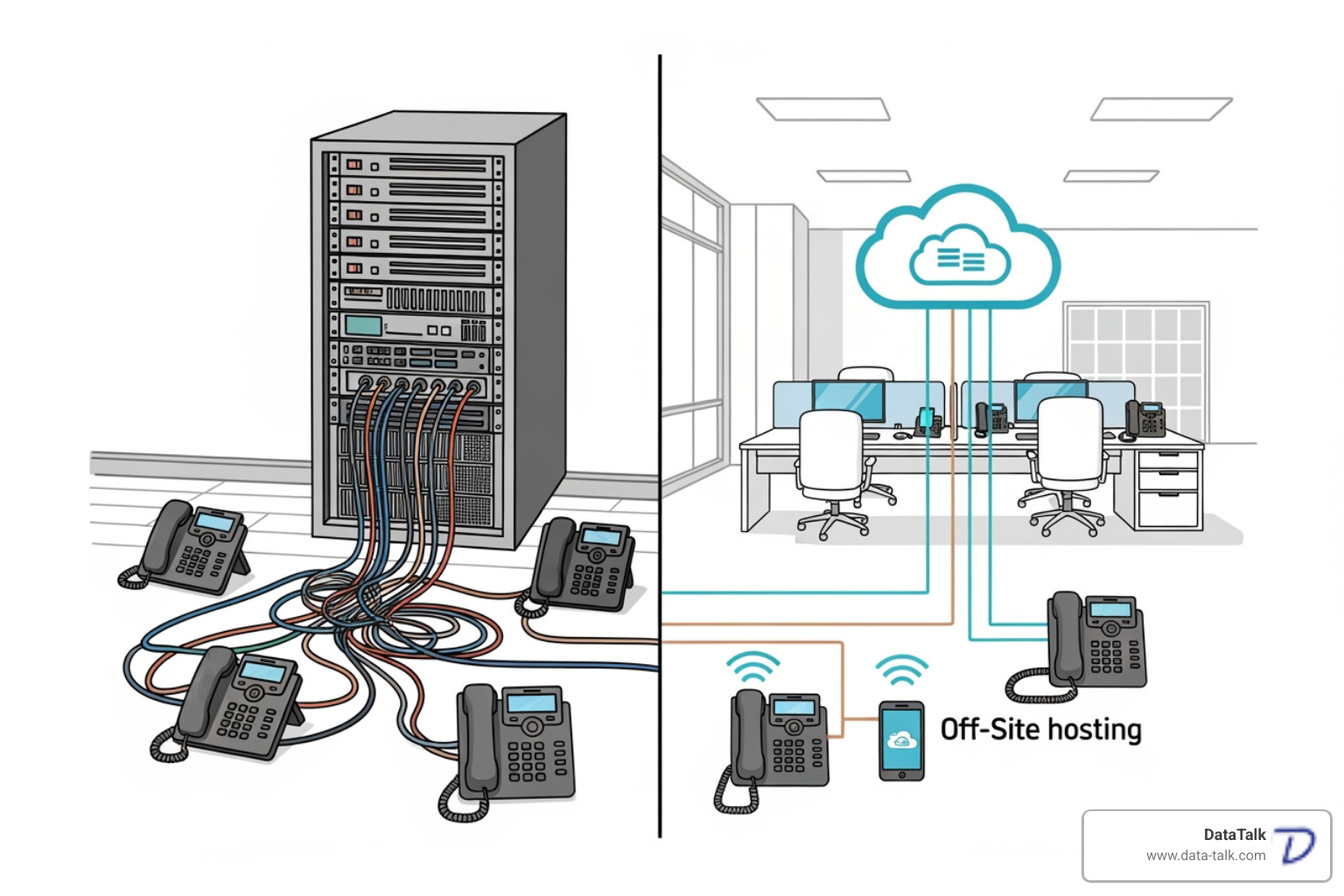
PBX stands for Private Branch Exchange, which is your company’s private telephone network. For decades, a PBX was a physical switchboard that managed calls. The internet changed everything with Voice over Internet Protocol (VoIP), which sends your voice as digital data online. For general background, see Private branch exchange and Voice over IP.
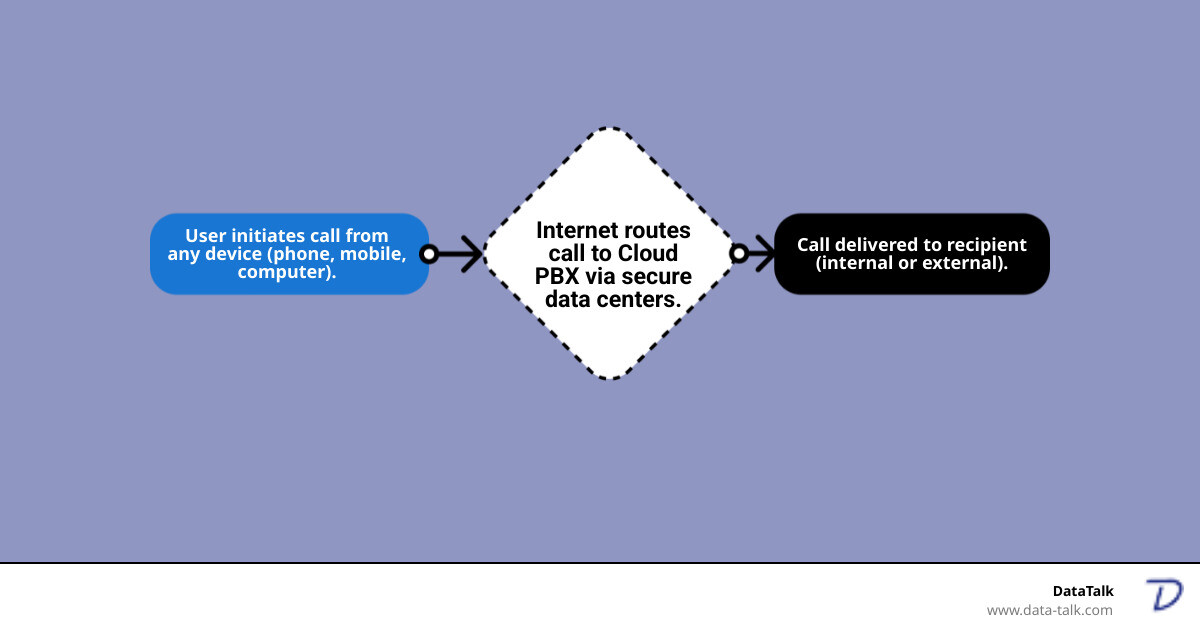
A cloud IP PBX moves the entire PBX system into secure, remote data centers managed by a service provider. All equipment, software updates, and maintenance are handled off-site by experts. When you make a call, your voice travels over the internet to the provider’s data center, which routes the call and manages features. You can use desk phones, computer softphones, or mobile apps to make and receive calls from anywhere with an internet connection.
SIP Trunking is the digital equivalent of traditional phone lines, allowing your internet connection to carry multiple calls at once, making the system efficient and flexible. Your provider manages the complex infrastructure, so you can enjoy a sophisticated phone system without the maintenance headaches. For more details, see our guide on Hosted IP PBX vs. Premise-Based IP PBX: What’s the Difference?, and learn more about the concept in SIP trunking.
Traditional PBX vs. Cloud PBX
The difference between old and new phone systems is stark. Traditional PBX systems require a massive upfront hardware cost and create an ongoing maintenance burden, often needing dedicated IT staff. Scalability is limited and expensive, requiring new hardware for new lines. These systems are also tied to a single physical location, a major drawback for modern businesses.
A cloud IP PBX flips this model:
- No Hardware Costs: Your upfront investment is minimal because you’re not buying expensive on-site equipment.
- Zero Maintenance: The provider handles all maintenance, upgrades, and security.
- Effortless Scalability: Add or remove users in minutes through a web portal. Your system grows with your business.
- Location Independence: Your team can work from anywhere with an internet connection.
The subscription model of cloud calling offers predictable monthly costs, eliminating surprise repair bills. For a deeper look, our article on Hosted IP PBX vs. Premise-Based IP PBX breaks it down.
The Technology Behind Cloud-Based Calling
VoIP technology is the foundation. It converts your voice into digital data packets that travel across the internet. This process, called packet switching, breaks your voice into pieces, sends them along the most efficient route, and reassembles them at the other end. Learn more in our guide on What’s Cloud Calling and How Does It Work?.
Codecs (algorithms that compress and decompress voice data) balance audio quality with bandwidth use. Your internet connection is crucial, as each call needs about 80-100 kbps of bandwidth. More importantly, Quality of Service (QoS) settings prioritize voice traffic to ensure calls remain clear, even when your network is busy.
While related, WiFi Calling vs. VoIP Calling are different. WiFi Calling is a mobile carrier feature for weak cell signal areas, whereas a VoIP system is a complete business communication platform. We explain this in our article on WiFi Calling vs. VoIP Calling.
For more technical details, explore the Differences Between SIP PBX & VoIP Phone Systems and the Difference Between VoIP Technology & SIP Trunking.
The Transformative Benefits of a Cloud IP PBX
Switching to a cloud IP PBX is about more than new phones—it’s about fundamentally improving how your business operates, communicates, and grows.

The hosted PBX market is expected to grow 15.5% by 2030, and small businesses are a key part of this trend. The reason is clear: the benefits are tangible.
Consider business continuity. With a traditional system, an office power outage means your phones are dead. With a cloud IP PBX, the system lives in the cloud. If your office has an issue, calls automatically route to mobile phones or other locations, so you never miss a call. This resilience is backed by a 99.99% uptime guarantee from most providers, which often exceeds the reliability of traditional phone lines.
These disaster recovery benefits provide peace of mind, making your phone system one less thing to worry about. For small businesses in Columbus, this reliability is essential. Explore more advantages in Why Small Businesses Need VoIP Phone Systems and the Benefits of VoIP for Remote Working.
Significant Cost Savings for Your Business
Switching to a cloud IP PBX saves you money in several key ways. The most obvious is the elimination of capital expenditure. There’s no expensive on-site PBX hardware to buy, freeing up cash for business growth.
Operational costs also drop significantly. You no longer pay for maintenance contracts, emergency repairs, or the IT hours spent managing a legacy phone system. Your provider handles all of this as part of your subscription.
Business owners also appreciate the predictable monthly billing. A cloud PBX system typically costs between $120 and $300 per year per user on average. This clear pricing makes budgeting simple, with no surprise bills for repairs or upgrades. For businesses in Dublin and Hilliard, these savings add up quickly. See how local businesses are benefiting in our guides on saving money in Dublin, OH and reducing costs for Hilliard, OH businesses.
Best Scalability and Flexibility
A cloud IP PBX grows with your business effortlessly. Forget buying capacity you don’t need or facing expensive upgrades when you outgrow your system.
With a cloud system, adding a new employee takes minutes. Simply log into your online portal and add a user—no technician or new wiring required. This flexibility works both ways; you can scale down during slower periods and stop paying for unused lines. This grow-as-you-go model ensures you only pay for what you need.
This flexibility extends to multiple locations. Offices in Columbus, Cincinnati, and Akron can all operate on one unified system with free inter-office calls. A receptionist in one city can seamlessly transfer a call to a team member in another.
This scalability is invaluable for businesses planning for growth, managing seasonal demand, or expanding to new markets without major infrastructure investments. Learn more in Five Strategies to Make Your Business More Scalable in 2024 and Scaling Your Hilliard Business With Hosted VoIP.
Essential Features and Integration Capabilities
A cloud IP PBX is a complete communication hub, bringing together voice, video, and messaging. This approach, known as Unified Communications as a Service (UCaaS), is designed to make your team more productive. It enables omnichannel communication, allowing customers to reach you by phone, text, or chat, and your team to respond from any device.
These robust features are designed to Boost Your Company’s Productivity.
Key Cloud PBX Features
Let’s review the features that make a cloud IP PBX a game-changer:
- Auto-Attendant: Your virtual receptionist greets callers and directs them to the right person or department, ensuring no call is missed.
- Interactive Voice Response (IVR): Lets callers use their keypad or voice to get information like business hours or account balances, freeing up your staff. Learn more about what business owners should know about IVR systems.
- Call Queuing & Routing: Places callers in a queue during busy times instead of giving a busy signal. Calls are routed based on availability, department, or other rules. Explore this feature in our guide to call queuing.
- Voicemail-to-Email: Delivers voicemails as audio files and transcriptions directly to your email inbox.
- Call Recording: Essential for training, quality control, and compliance. Find the valuable ways call recording can benefit your business and why it’s necessary for call centers.
- Video Conferencing: Built-in for face-to-face meetings with team members or clients, without needing separate software.
- Business Texting (SMS/MMS): Allows you to send and receive texts from your business phone numbers, a preferred method for many customers. Learn how to leverage text messaging in your business.
Integrating Your Cloud IP PBX with Business Tools
A modern cloud IP PBX connects with the other software your business relies on, creating seamless workflows.
Integrating with CRM platforms like Salesforce, Zoho, or HubSpot allows customer records to pop up on-screen during a call, providing your team with complete context for personalized service. Our guide to VoIP CRM integration shows you how.
Helpdesk software integration can automatically create support tickets from incoming calls, attaching call recordings for full context.
Microsoft 365 and Google Workspace integrations bring communication into the tools your team uses daily, allowing for click-to-call and presence status visibility without switching apps.
For unique needs, many providers offer APIs for custom applications, letting you embed communication features directly into your proprietary software. These integrations turn your phone system into a central hub that ties all your business tools together.
Empowering Modern Workforces and Ensuring Security
Remote and hybrid work are the new normal, and a phone system that can’t support a distributed team is a liability. A cloud IP PBX is built for this new era of work, connecting your employees wherever they have an internet connection.

Mobile apps and softphones (software for your computer) make this flexibility possible. Your team can take calls on their business line from a client site, their home office, or on the road. Everyone stays connected, and your customers receive seamless service.
This flexible approach is one of the key benefits of VoIP for remote work that businesses across Ohio are embracing.
Supporting Distributed Teams and Remote Work
With a cloud IP PBX, your employees get true work-from-anywhere flexibility. They can use their business extension on a laptop, desktop, or mobile device.
Team members can see each other’s unified presence status (available, on a call, etc.), which eliminates phone tag and improves efficiency. Seamless call transfer works between employees regardless of their location, so a receptionist in Columbus can easily transfer a call to a technician in Grove City.
Many businesses are also adopting BYOD (Bring Your Own Device) policies. A cloud PBX app allows employees to use their personal smartphones for work calls while keeping business and personal communications separate. It’s worth weighing the pros and cons of BYOD.
These features are specifically designed to support modern work arrangements. For a deeper dive, see our guide on telephony features that support remote work teams.
Security Advantages of a Cloud IP PBX
When moving communications to the internet, security is a natural concern. However, a cloud IP PBX from a reputable provider often delivers better security than a traditional on-premise system.
Your provider invests millions in provider-managed security, including enterprise-grade firewalls, intrusion detection, and 24/7 monitoring by security experts—a level of protection most small businesses cannot afford on their own.
Key security features include:
- Encryption: Calls are protected using TLS and SRTP, which scramble the data to prevent eavesdropping.
- Redundant Data Centers: Geographically dispersed and physically secured facilities ensure your service stays online even if one location has an issue.
- Session Border Controllers (SBCs): These act as specialized security guards for VoIP communications, protecting against attacks and ensuring call quality.
- Two-Factor Authentication (2FA): Adds an extra layer of security to prevent unauthorized access to your system’s administrative settings.
Security updates and patches are applied automatically by your provider, protecting you from the latest threats without any effort on your part. For businesses concerned about security, learn more about protecting your Dublin business communications and how to protect your VoIP phone system. Before choosing a provider, always ask: Is your VoIP service secure?
How to Choose the Right Solution for Your Business
Choosing the right cloud IP PBX is about finding a partner who understands your current needs and can support your future growth. Start by assessing your business: How many users do you have? What are your biggest communication pain points? Are you planning to grow or add remote team members?
While budget is important, look beyond the monthly cost per user. Consider the savings from eliminating maintenance fees, hardware costs, and surprise repair bills. Our tips for choosing the best business phone system can walk you through this process.
Evaluating Providers and Platforms
When evaluating providers, don’t just focus on price. A good hosted cloud IP PBX provider should offer a solid Service Level Agreement (SLA). This is a contract that guarantees uptime (typically 99.99%), sets performance standards, and defines compensation if those promises aren’t met. It’s an insurance policy for your phone system.
Customer support is also critical. When issues arise, you need fast access to knowledgeable technicians. Ask potential providers about their support hours, response times, and escalation procedures. For business owners in Grove City and Central Ohio, we’ve compiled top questions to ask before signing a telecom contract to help you make a confident decision.
Crucially, your internet connection can make or break your VoIP experience. That’s why we created our VOIP Scout Test. This network readiness assessment checks your infrastructure before you switch, guaranteeing your new cloud IP PBX will deliver optimal voice quality. We identify and fix potential issues upfront, ensuring a smooth deployment from day one.
The Future of Business Communications
The cloud IP PBX systems of today are just the beginning. Artificial Intelligence (AI) is becoming a business reality, powering features like voicemail transcription, call sentiment analysis, and post-call summaries. These tools help your team work smarter.
Integrations will continue to deepen, creating a world where voice, video, text, and business apps work together seamlessly. We’re also seeing a rise in CPaaS (Communications Platform as a Service), which lets businesses embed communication features directly into their own applications.
These are not distant dreams; they are part of the latest tech advancements in cloud telephony happening now. With a modern cloud system, these new capabilities are rolled out automatically, ensuring your phone system evolves with your business.
Frequently Asked Questions about Cloud Phone Systems
Many business owners in Columbus and throughout Ohio are curious about switching to a cloud IP PBX. Here are answers to the most common questions we hear.
What does PBX stand for?
PBX stands for Private Branch Exchange. It’s your company’s private telephone network that manages both internal calls between employees and external calls. In the past, a PBX was a large, physical box in an office. Today, a cloud IP PBX does the same job, but it’s a virtual system hosted in secure data centers and delivered over the internet. You can learn more about our approach to PBX Business Phone Systems, and see a general overview in Private branch exchange.
Can I keep my existing business phone numbers?
Yes, absolutely. You can keep your existing phone numbers when you switch to a cloud IP PBX. The process is called number porting and is regulated by the FCC. Your new provider, like DataTalk, handles the entire process of transferring your numbers from your old carrier. We manage this carefully to ensure a smooth transition with minimal service disruption, so your customers can keep calling the numbers they already know. For more information, see the FCC’s guide on porting: keeping your phone number when changing service providers.
What kind of internet connection do I need?
This is a critical question. A cloud IP PBX requires a stable, high-quality internet connection for clear calls. While each call only uses about 80-100 kbps of bandwidth, raw speed isn’t the only factor. Voice quality depends on low latency (delay) and low jitter (variation in delay). High latency or jitter can cause choppy audio and dropped words.
This is precisely why we developed the VOIP Scout Test. Before deploying your new system, we run comprehensive tests on your network to measure packet loss, latency, and jitter. This allows us to identify and address any potential issues before you go live, guaranteeing your system delivers professional-quality calls from day one. Understanding and solving the issue of packet loss is key to a successful VoIP deployment.
Make the Switch to a Modern Phone System
The business communication landscape has changed. Relying on an outdated phone system holds your business back. A cloud IP PBX is the practical foundation modern businesses need to stay competitive, connected, and ready for growth.
Making the switch delivers tangible benefits: cost savings that free up capital, scalability that adapts to your team’s size with a few clicks, and improved features like auto-attendants and CRM integrations that boost productivity. These are the tools that separate thriving businesses from those struggling to keep up.
For businesses across Columbus, Akron, Cincinnati, and the surrounding Ohio communities, the opportunity is clear. Whether you’re dealing with expensive maintenance, supporting a remote team, or simply paying too much for too little, a cloud IP PBX is the solution.
At DataTalk, we specialize in helping Ohio businesses make this transition. We’re a local company that understands the needs of our community, and we design custom cloud/VoIP phone systems to fit your specific requirements.
What truly sets us apart is our exclusive VOIP Scout Test. We guarantee your network is ready for optimal voice quality before deployment. We test, identify, and fix any potential issues proactively. No surprises, no choppy calls—just a system that works perfectly from your very first call.
Don’t let another month go by with a phone system that costs too much and does too little. Your team, your customers, and your business deserve a communication system built for today’s world.
Ready to explore what a modern phone system can do for your business? We’d love to show you.